
Thank you for pausing to see what my article is about. Although I might not be exact on the above statistic, the fact however remains true – most marketers don’t know the fundamentals.
Why do you ask? It’s simple because nobody taught them.
Say hello to the New-age Marketer! He spends most of his day on social media, talks about brand awareness, customer personas, and blurts out (so-called) technicals like SERP, CAC, and AOV in random conversations.
This could be a teenager who is still in college to someone working at a big marketing agency who has been in the field for years.
And deep down you know most of the things we speak are just jargon. I know because I used to do this a lot (sometimes as a tactic to confuse when I can’t convince).
This is for all those marketers, businesses and entrepreneurs who want to up their game in marketing – time to make the fundamentals clear. Whether you’re starting your career or trying to sharpen your skills for the next campaign, you need a strong foundation to move forward.
Okay, what are the fundamentals?
Well asked! In this article, I explain the marketer’s role in the organization and provide frameworks for implementing an integrated marketing strategy leveraging what we call “Mass Trust Blueprint”.
In a quick overview, we cover the below:
- The Law of Marketing
- Traditional Marketing vs. Digital Marketing
- The CATT Marketing Funnel
- Integrated Digital Marketing
Recognizing the basic marketing building blocks will establish the foundation for your marketing skills within your future entrepreneurial activities and career positions.
It all starts by putting in place the foundations of a successful marketing system. Any one of these foundations can multiply your sales by a factor of 3-10. But when you start combining them, their impact is awesome.
Most of these foundations are simple, obvious, and common sense. And they cost little or nothing to put in place But knowing them doesn’t count. You only get the right results once you put these foundations to work in your business.
Okay, let’s start!
The Law of Marketing
The most careless approach to building your business is to decide what your marketplace really wants or needs without first talking to them about it.
Marketing is about sending the right message, to the right person, at the right time.
You owe it both to them and to yourself because what you think is important to your prospects and customers may in fact be totally unimportant. What you could ignore may actually be all-important.
Marketing starts before creating the product. Doing this research will allow you to focus on the key issues behind your customer’s buying decisions and true needs. The moment you understand what they really want, need, and expect and what they’re drawn to and repelled by, you’ll become so much better connected to them.
A great product converts your customers into brand ambassadors.
You’re able to be more persuasive because you’ll be in alignment with what your customers are really looking for. And if you do this right, don’t be at all surprised if a lot of your competitor’s customers start flocking to you in the process.
Traditional Marketing vs Digital Marketing
Traditional Marketing is a conventional mode of marketing that helps to reach out to a semi-targeted audience with various offline advertising and promotional methods.
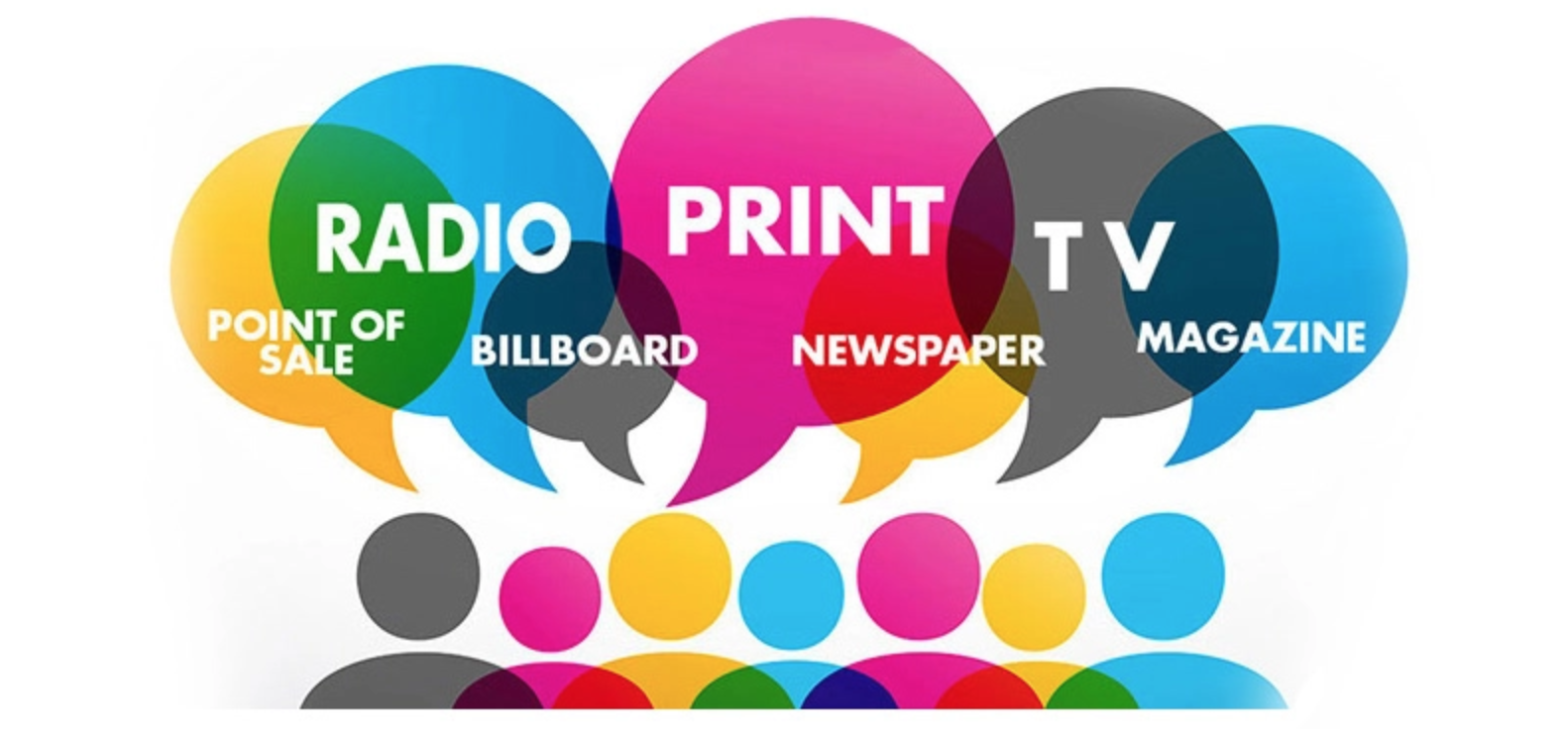
Many of the common and most tried offline marketing tactics come under the following five major categories:
- Print (magazines, newspapers, etc.)
- Broadcast (TV, radio, etc.)
- Direct Mail (catalogues, postcards, etc.)
- Telephone (telemarketing, sms marketing, etc.)
- Outdoor (billboards, fliers, etc.)
If a product is generic with a very wide targeting – TV ads, radio ads, or newspapers can reach millions at a low cost. While traditional marketing is still effective, it’s not the only way to make your product popular among your target market.
Today, technology has grown and is enabling businesses to connect to their audience like never before. Which is why it’s important to consider the drawbacks of traditional marketing before investing in it. This is where digital marketing comes into play.
Any business (regardless of its size) can leverage digital marketing to reach out to their target market, connect with prospects and convert more of them into customers/clients. Everything from search engine marketing to Facebook marketing comes under digital marketing.
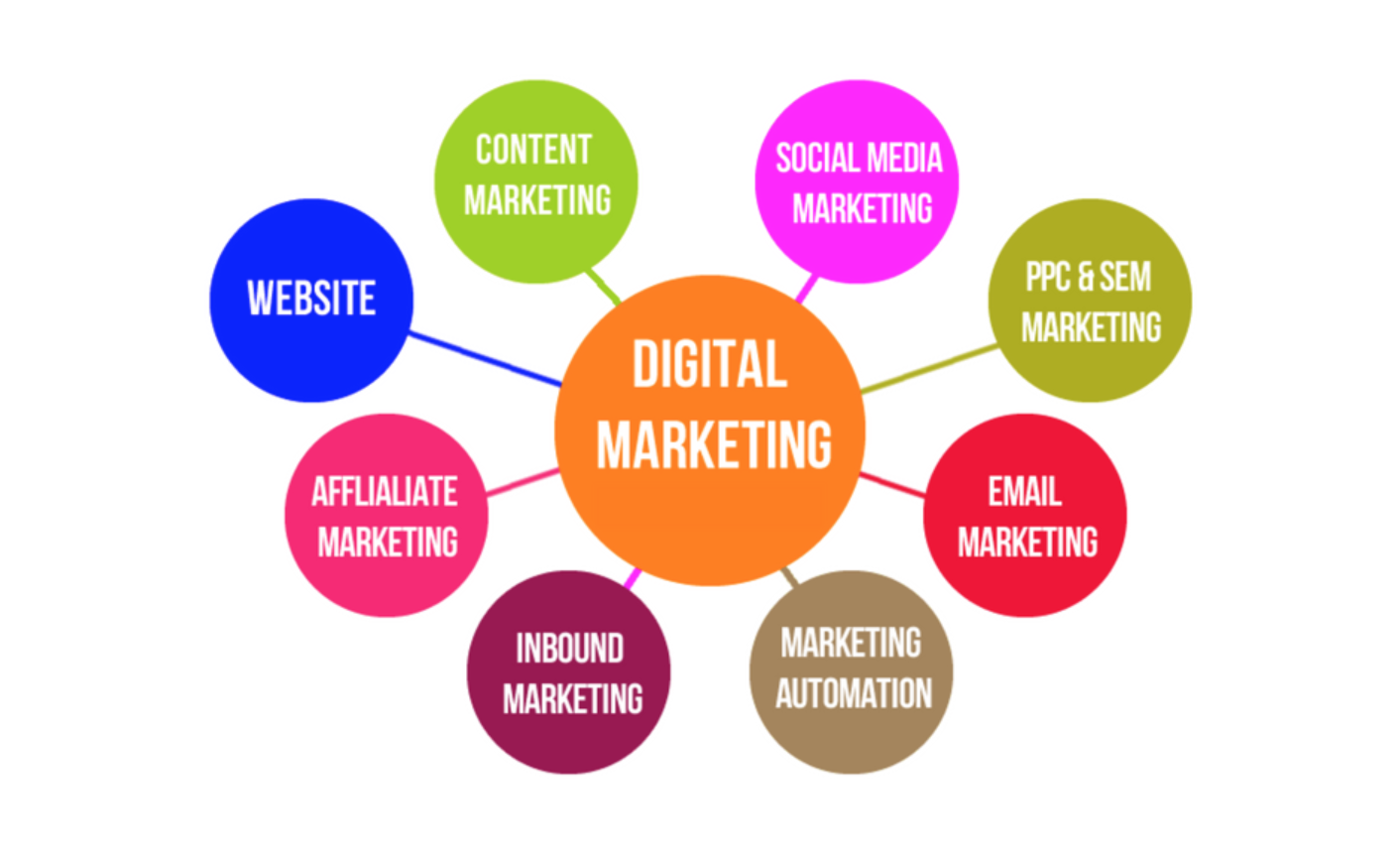
The reason why digital marketing is crucial for a business today is because the Internet is becoming one of the most used tools. More and more people are logging on the web to carry out their day to day activities, which includes purchasing goods and services.
But at the same time, digital marketing has its downsides. With multiple businesses trying to catch your attention online, it is difficult to stand out online. A huge possibility that your target customer ignores your business.
Which brings us to our next section: the CATT Marketing Funnel.
The CATT Marketing Funnel
The only way you can stand out of the crowd both as a marketer and as a business is when you target specific people. This in marketing terminology is called a niche. It is the intersection of what the market needs, what you’re good at, and what you would be paid for.
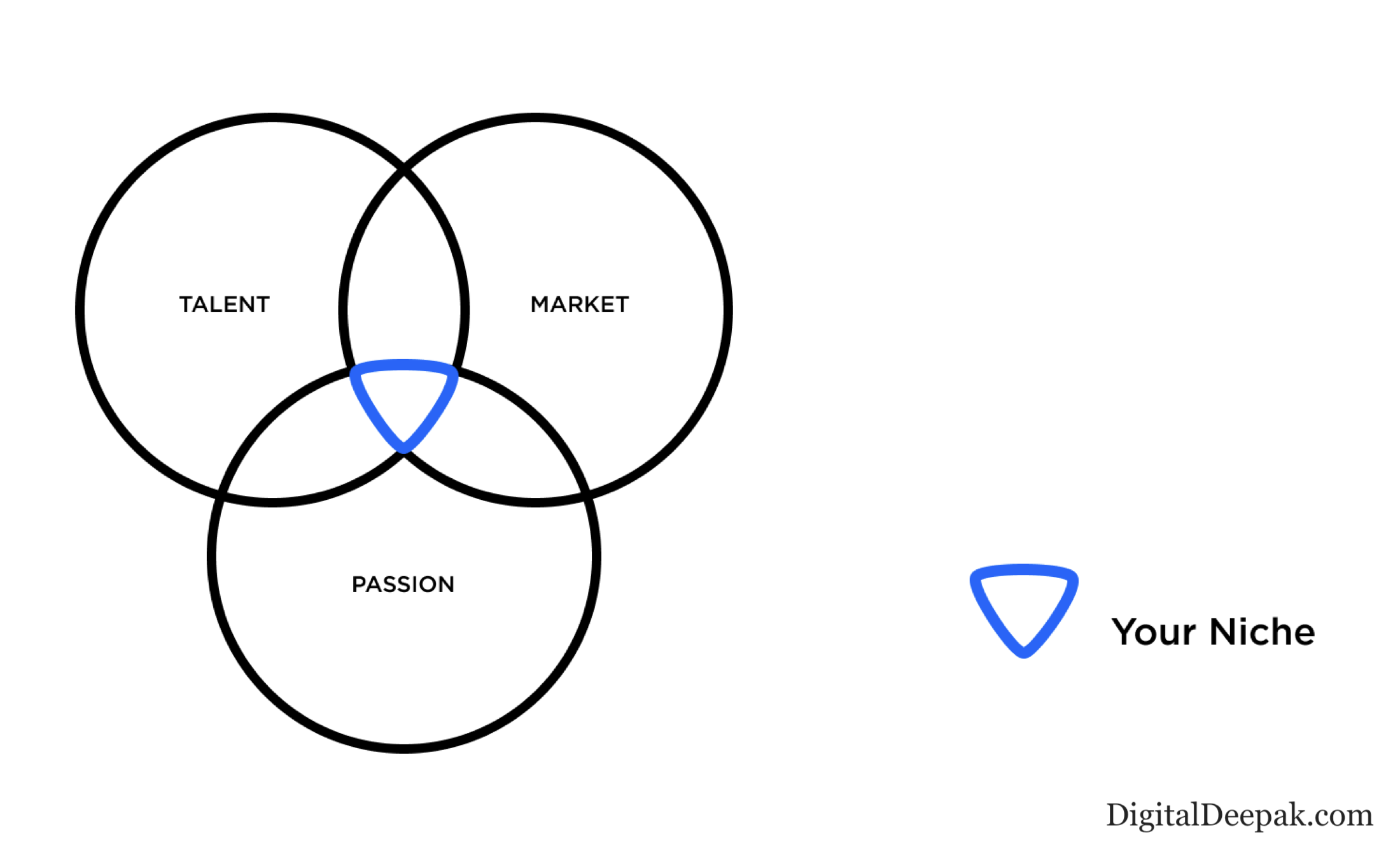
Examples of niches could be:
- Website design for dentists
- Fitness program for working moms
- Laptop for Gamers etc.
Finding a niche isn’t as easy as it seems. You get to understand it after multiple market experiments, user surveys, and feedback from existing customers. Here’s an interesting article which shows you how to find your niche.
And the best way to leverage a niche to create loyal brand followers is through the CATT framework.
Wealth = n^ CATT
where CATT stands for
-
- Content (C),
- Attention (A),
- Trust (T),
- Transaction (T).
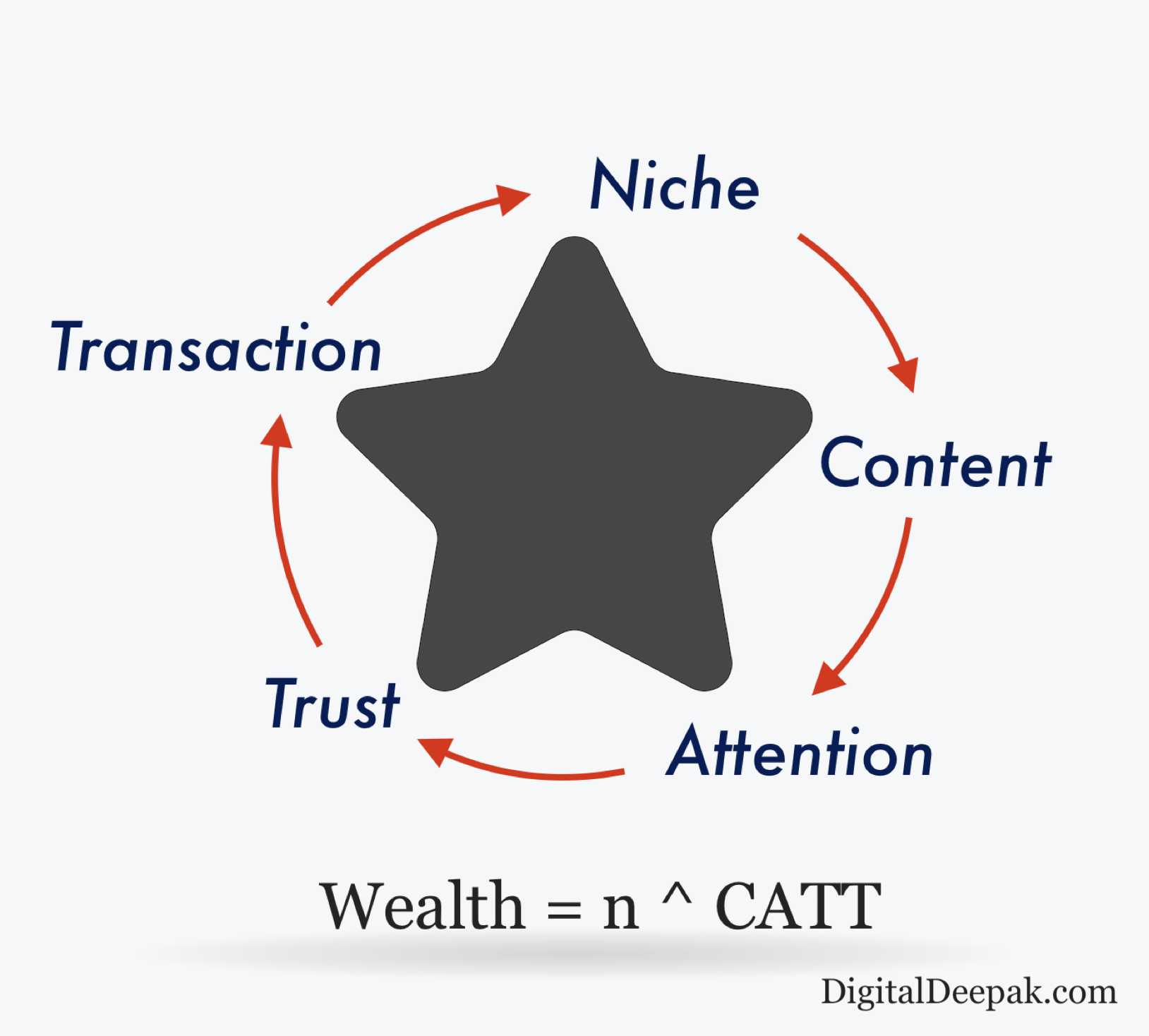
What this means: Your success and wealth depends on the niche you choose. Once you’ve closed in on the niche, create useful content via blogs, webinars, videos etc. that attract and drive the attention of customers to your brand. Build trust by giving high value to your customers in their day to day life. And then use the natural sales method to convert them.
The simplest example of this would be Facebook. Facebook started with a niche of college students. They started an online platform for college students. They organized physical events, did promotions, featured ads across all the top colleges in the country to attract attention.
Once the students signed up, they gave options for communities, updates from friends and the opportunity to collaborate with was very useful for college. Slowly they introduced games, marketplaces, and ads to convert for revenue. People were hooked to the platform and didn’t think twice to spend on it.
Fascinating isn’t it? But how does all this tie into all the tools that marketers use on a daily basis?
That brings us to the last section of this article.
Integrated Digital Marketing
Most businesses focus on 1-2 marketing mediums to promote their business and they push their products via that medium. This results in very little conversion.
Why? Because people don’t like being sold to.
Here’s a better way to do. Use the CATT model and leverage the Integrated Digital Marketing Framework to convert.
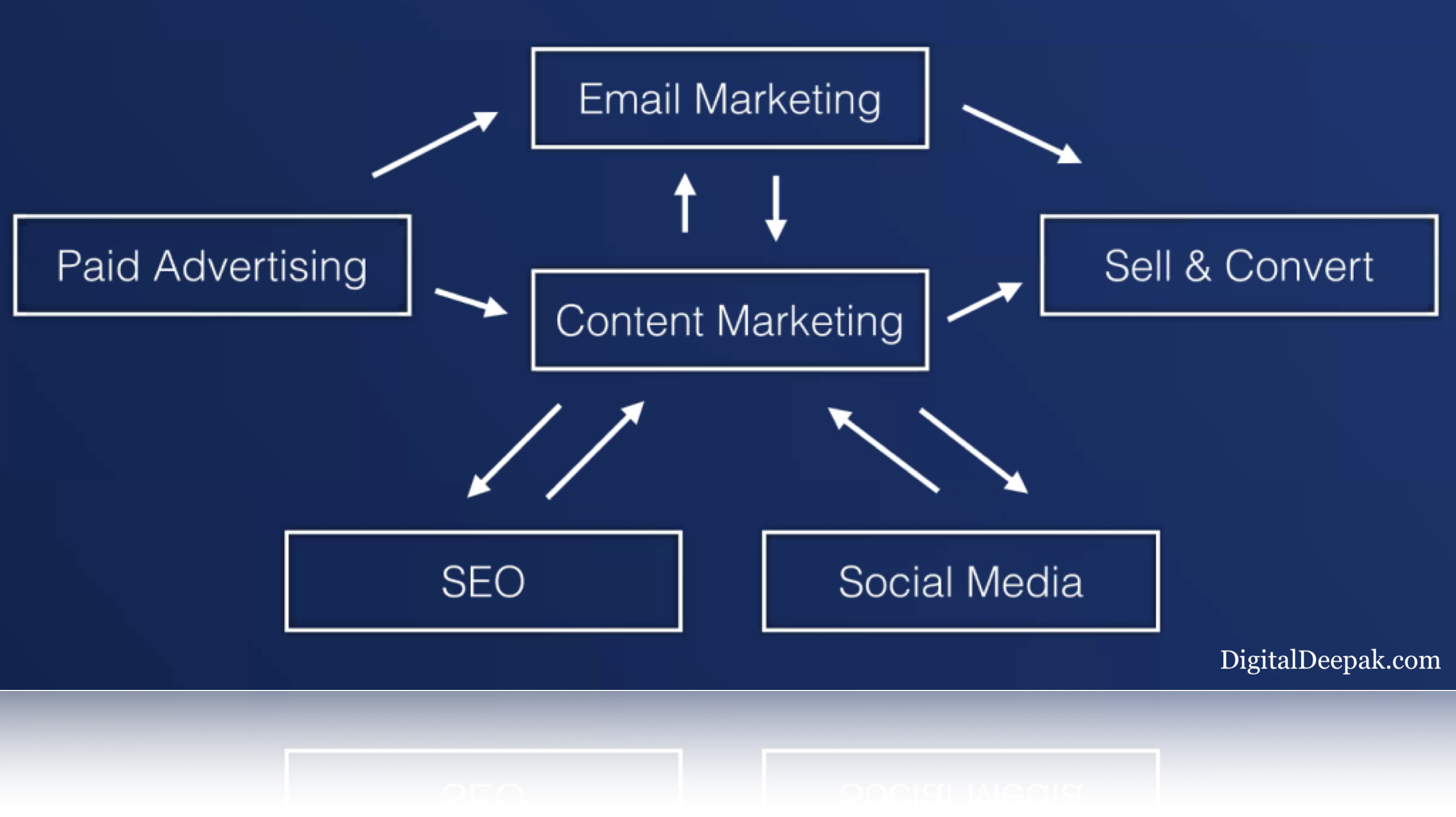
For example: Use ads on google or facebook to get people to sign-up to your mailing list or offer a free ebook as a download. On they share the email, send them high-value content via email. If people like your content, they will share the same on social media. Understand more about their needs using targetted content and behavior. Using this information offer them a product that is personalized and addresses their need.
This, my friends, is called the Integrated Digital Marketing Framework. You use mediums to gain attention first rather than a payment. Over time, gain trust and convert them. The outcome would be an 80-90% conversion.
And isn’t that what all of us look for. More conversions, more weath and more success.
Hope this helps. 🙂
